21 October 2025
The Phygital Flagship Is the New Media Channel
Physical retail experience is scaling up into temples of identity, merging architecture and spectacle to create cultural landmarks that no digital campaign can replicate. The store is no longer a distribution point — it's the most powerful content asset a luxury brand owns.
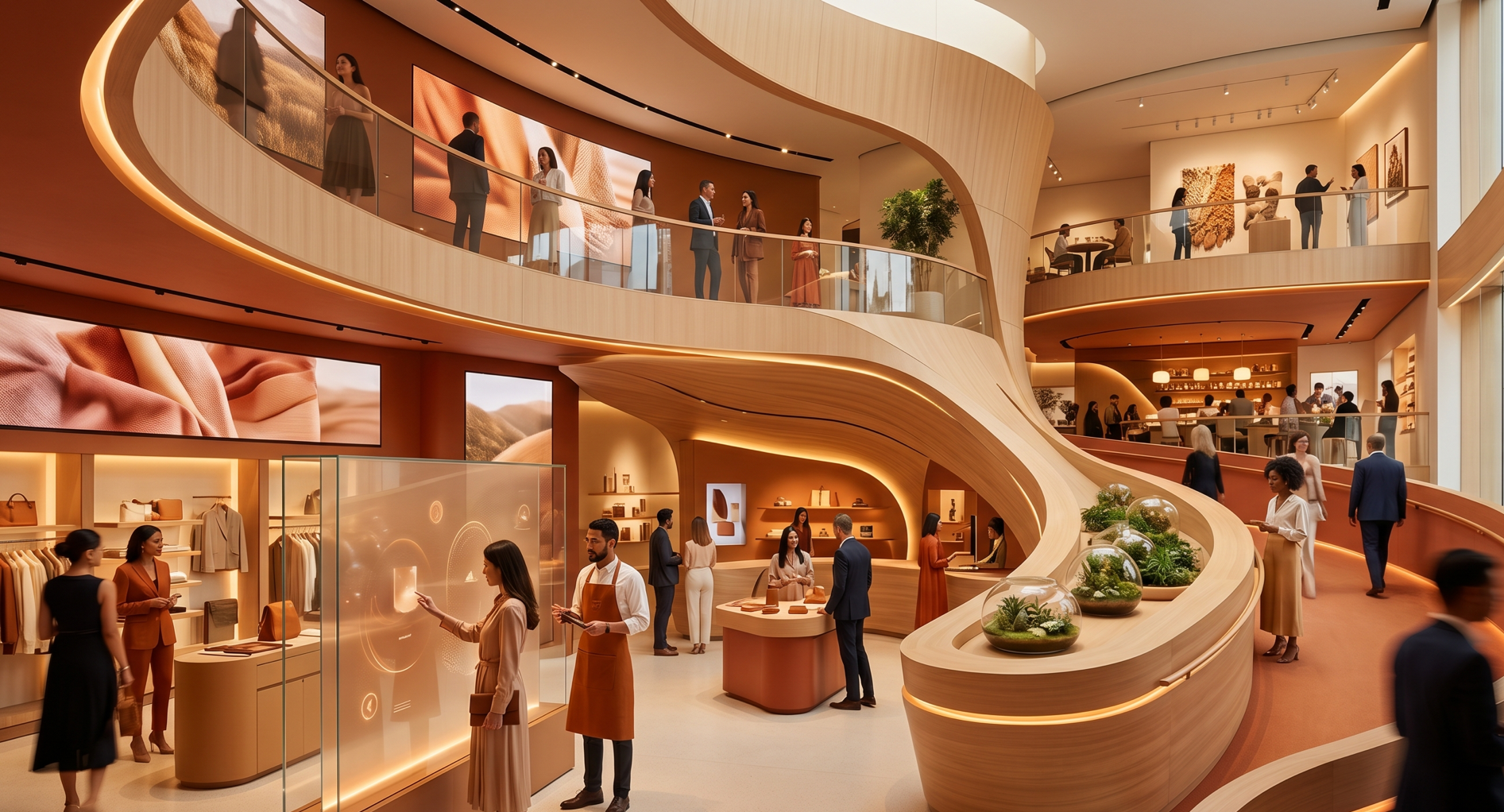
The digital revolution was supposed to make physical retail irrelevant. Instead, it made it irreplaceable — but only for the brands willing to reinvent what a store actually is. In 2026, the most sophisticated luxury flagships are no longer retail spaces with technology added. They are media channels with product inside them. The architecture tells a story. The technology makes it personal. The human interaction makes it unforgettable.
Louis Vuitton's cruise-ship-shaped Shanghai flagship drew global attention not as a store but as a cultural event — combining exhibitions, a café, and programming that gave people reasons to visit who had no immediate purchase intent. The company is now opening its first branded hotel on Paris's Champs-Élysées. Hermès has turned its Carré H into a gallery-style celebration of craft. Dior's Seoul pop-up integrated gardens, local designers, and a café into an experience that generated content long after the doors closed. These are not retail stunts. They are brand infrastructure investments.
The phygital flagship works because it collapses the distinction between visiting a brand and experiencing it. Sensors read dwell time and engagement hotspots. Smart mirrors connect in-store behavior to online profiles. AR installations translate craftsmanship into narrative. Every square meter becomes both a data point and a story. The store that used to measure success in transactions per day now measures success in minutes of engagement, social impressions generated, and return visit rate.
For CMOs building brand strategy in 2026, the flagship is no longer a channel to manage alongside digital. It is the channel that makes digital meaningful — the physical proof point that no AI-generated content can fabricate. The brands that understand this are not spending on stores. They are investing in the only medium that cannot be skipped, blocked, or scrolled past.
Questions & answers
- What is a "phygital" customer experience in modern retail and marketing?
- A "phygital" experience seamlessly blends physical tactile environments—such as retail stores or flagship showrooms—with interactive digital technology. By connecting physical touchpoints with digital data layers, brands deliver personalized, friction-free customer journeys. This integration ensures online research and offline physical engagement inform and reinforce each other.
- How does phygital experience design reduce customer friction in physical spaces?
- Phygital design reduces friction by incorporating digital tools like mobile checkout, interactive digital displays, clienteling apps, and augmented reality into physical locations. These technologies allow customers to access inventory details, product background, and instant payment options without waiting in line. Eliminating physical bottlenecks elevates customer satisfaction and speeds up conversion.
- What is the key to aligning online brand messaging with in-store physical touchpoints?
- The key to alignment is maintaining a unified customer data platform and consistent brand storytelling across both digital channels and physical store staff. Equipping sales associates with real-time digital profiles ensures in-person hospitality reflects online preferences and interaction history. This continuity delivers a cohesive, premium brand experience across every channel.