3 August 2026
The Next Pulse August 3rd
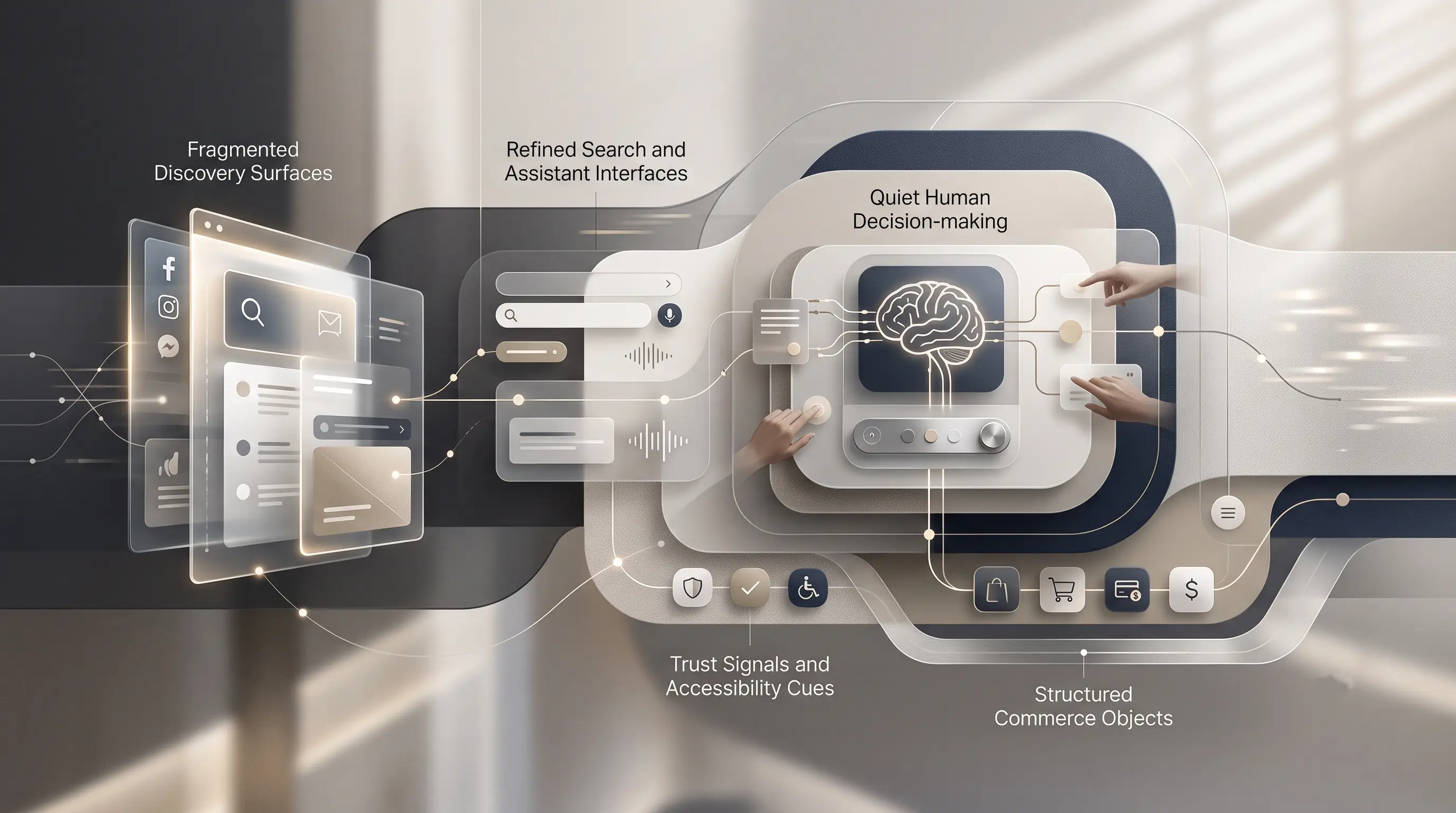
Leaders are starting to grapple with the second-order consequences of AI everywhere — how brands are discovered, how performance is measured, how usable experiences remain, and how trust survives machine-mediated decisions. For senior brand and digital leaders, the opportunity is no longer simple adoption. It is operational design.
AI.
CMSWire’s July 30 article, Post-AI Marketing Needs New Martech Architecture, Not New Tactics, captured the week’s smartest shift. As generative tools become ambient, advantage moves away from isolated prompts and toward connected systems: cleaner data, tighter orchestration, governance, and shared context across teams. In other words, the stack is becoming strategy. The brands that treat AI as architecture rather than as a layer of creative acceleration will be the ones that compound value rather than just volume.
Digital Marketing.
MarTech’s July 30 piece, How to measure marketing when AI owns discovery, and Search Engine Journal’s July 30 warning, Google’s ‘Generative AI’ Search Console Data Is A Trap For Marketers, point to the same issue: discovery is fragmenting faster than dashboards can explain it. If customers increasingly encounter brands through AI overviews, assistants and synthesized answers, impression and click metrics tell only part of the story. Marketing teams will need better proxies for visibility, preference and assisted conversion before finance starts questioning the spend.
CX and UX.
The customer-experience implication is becoming harder to ignore. Search Engine Land’s July 31 article, AI is building your digital experience. It’s also making it less accessible., is a useful warning: speed without UX discipline can degrade legibility, accessibility and trust at the exact moment brands are automating more surfaces. Pair that with CMSWire’s July 27 article, Can Your Martech Stack Support AI Agents, Or Is It Just in the Way?, and the signal is clear: once AI touches customer-facing journeys, weak architecture, messy governance and disconnected systems become trust problems, not just workflow problems. Trust is no longer a soft brand virtue. It is an operating requirement spanning design, content, compliance and service.
Commerce.
PYMNTS’ report, Global Digital Shopping Index: Agentic Commerce Deep Dive – July 2026, suggests e-commerce is entering a new mediation layer, where agents increasingly shape evaluation, not just fulfillment. That raises the bar for structured product data, retailer-content discipline and brand distinctiveness. When software helps shortlist, compare and recommend, bland brands become even more substitutable. Performance marketing may still close the sale, but machine-readable brand clarity will increasingly decide who makes the consideration set.
Behavioral Science.
The most useful human reminder came from The Drum’s July 27 interview, Judge of the Day: Nancy Harhut on why B2B buyers can't stop being human just because they're at work. It lands well against this week’s AI-heavy news cycle. Even inside more automated journeys, decision-making still runs through heuristics: fluency, risk aversion, social proof and familiarity. That matters because brands responding to AI-mediated discovery with more complexity — more claims, more options, more friction — may actually weaken response. The winning move is not maximal information; it is clearer cues that make choosing feel safer and easier.
Questions & answers
- How are autonomous AI agents transforming marketing technology stacks?
- Autonomous AI agents are replacing static automation software by independently managing multi-step marketing workflows across research, content production, and media optimization. By communicating through standardized Model Context Protocols (MCP), AI agents access real-time enterprise data to adjust targeting dynamically. This transition shifts marketing teams from manual campaign execution to strategic supervision.
- What role does Model Context Protocol (MCP) play in AI agent orchestration?
- Model Context Protocol provides a unified communication layer that connects autonomous AI agents to enterprise databases, CRM platforms, and creative repositories. MCP ensures agents receive structured, real-time context without requiring custom point-to-point integrations. This standardized architecture prevents factual hallucinations and maintains strict brand compliance across automated customer touchpoints.
- How should marketing executives prepare their teams for agentic AI adoption?
- Executives should focus on unifying organizational data architecture, defining clear brand guardrails, and establishing human-in-the-loop oversight workflows. Upskilling marketing staff in prompt architecture and behavioral analysis ensures human judgment guides autonomous agent execution. This balance maximizes operational speed while safeguarding long-term brand equity.