12 February 2026
The Luxury Slowdown Is a Positioning Opportunity
Luxury executives expect 2026 to be a year where value outweighs volume, with brands prioritizing pricing power and brand desirability over growth at all costs. For CMOs, a tighter market is the best brief they will ever get — it forces clarity on what the brand actually stands for.
Between 2019 and 2023, luxury brands raised prices on iconic products by up to 100%. The result was a period of extraordinary margins and, ultimately, a loss of 50 million aspirational customers. The market correction underway in 2026 is uncomfortable for the brands that rode that wave without building the brand equity to justify it. But for the brands with genuine stories to tell, it is a clarifying moment that competitors are leaving wide open.
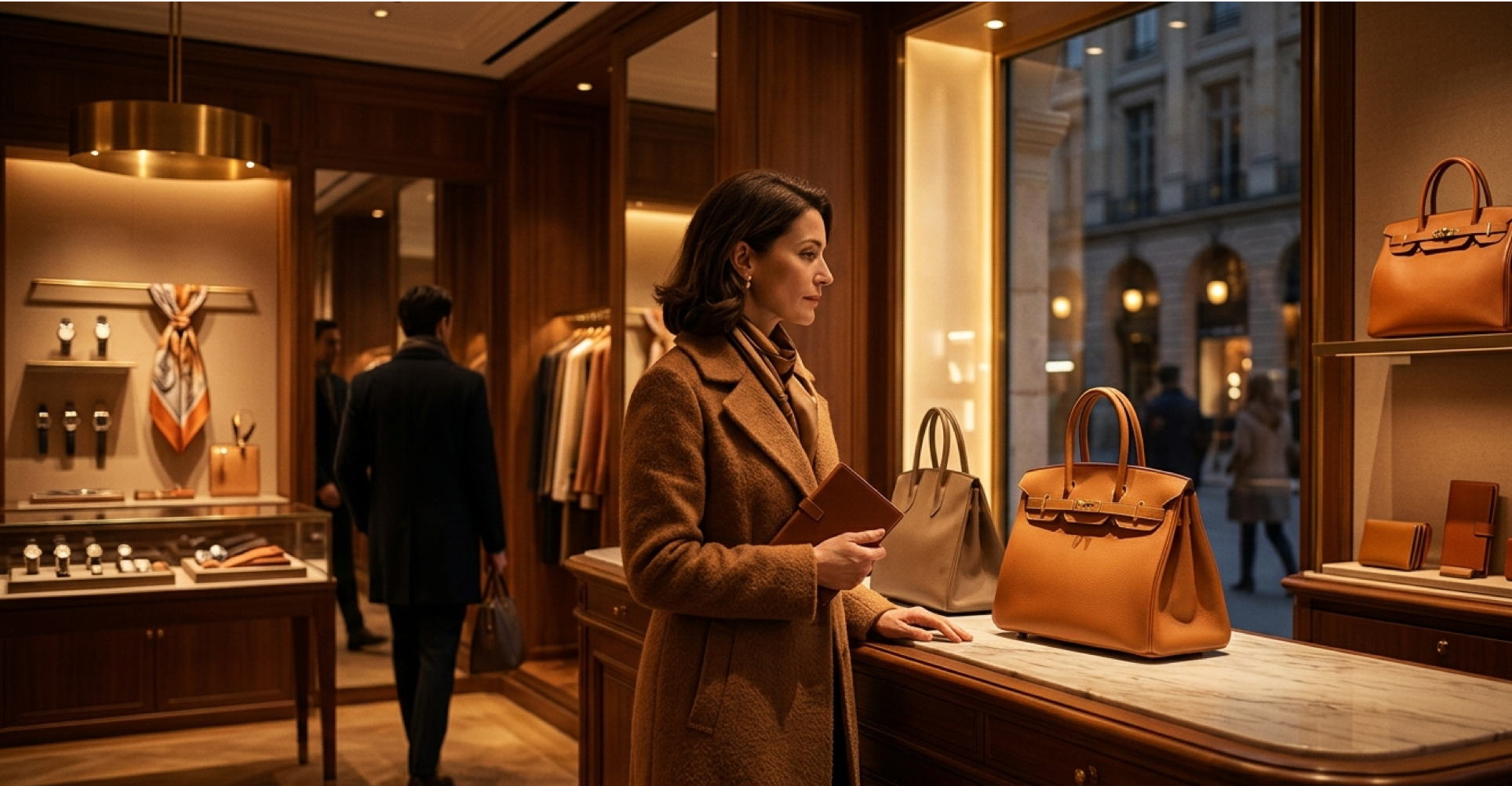
Hermès grew its brand value by over 17% in a year when Louis Vuitton declined 4.9%, and Gucci fell 35%. The divergence is not accidental. Hermès never chased volume. It never discounted, never overextended, never confused accessibility with desirability. In a market correction, that discipline becomes the industry's most valuable brand asset. The slowdown did not hurt Hermès. It proved its strategy correct.
McKinsey's State of Fashion report is clear on what the reset requires: brands must reduce reliance on price-led growth and refocus on creativity and craftsmanship. The luxury market is bifurcating sharply. At the ultra-high end, demand remains resilient. In the middle, brands that relied on aspiration without substance are losing clients. The winners of the next cycle are the ones investing now — in brand narrative, in client experience, in creative direction — while competitors are cutting.
For CMOs, this is the moment the job was designed for. When the market is growing, everyone looks smart. When it contracts, the brands with real positioning pull away from everything built on momentum alone. The brief writes itself: know what you stand for, communicate it with conviction, and go deeper with the clients who have chosen you rather than chasing the ones who haven't. Slowdowns do not destroy great brands. They reveal which ones were great to begin with.
Questions & answers
- Why should luxury brands view market slowdowns as strategic opportunities?
- Market slowdowns expose operational inefficiencies and force brands to shift focus from superficial volume growth back to core brand equity and client retention. During economic contractions, aspirational buyers pull back, leaving high-net-worth core clients as the primary revenue driver. Brands that reinvest in elevated clienteling, storytelling, and craftsmanship emerge stronger as market conditions recover.
- How should luxury marketers pivot their strategies during economic contractions?
- Luxury marketers should pivot away from heavy top-of-funnel customer acquisition campaigns and invest in deepening relationships with existing Top Tier clients. Reallocating budget toward private experiences, bespoke services, and high-touch loyalty programs protects margins and preserves brand desirability without resorting to discounting.
- How does maintaining brand pricing power protect luxury positioning in a downturn?
- Maintaining pricing power is essential because discounting destroys the perception of exclusivity and quality that defines luxury. Brands that hold firm on pricing and focus on reinforcing perceived value signal structural financial health and brand desirability. This discipline protects long-term brand equity while reinforcing trust among core luxury buyers.