9 September 2026
Human-AI Collaboration: The Pilot in the Cockpit
Enterprise AI scaling succeeds when organizations treat artificial intelligence as a collaborative teammate rather than an unmanned replacement. By mastering trust calibration, implementing dynamic contextual privacy routing, and utilizing expert-verified synthetic data, enterprise leaders eliminate employee resistance, prevent costly errors, and build joint cognitive systems that deliver verifiable business returns.

Across boardrooms, a narrative took hold over the past three years: the promise of the "lights-out," fully autonomous enterprise. Software vendors pitched visions of autonomous agents running procurement, marketing, customer operations, and compliance without a single human touch.
Yet, when organizations attempt to deploy these systems at scale, reality strikes back. Projects stall, outputs drift into embarrassing non-deterministic errors, employees quietly bypass sanctioned platforms, and legal teams freeze rollout approvals. Over 70% of enterprise AI investments remain trapped in pilot purgatory because leadership fell into a fundamental architectural trap: treating AI as an unmanned replacement for human workers rather than a joint cognitive system.
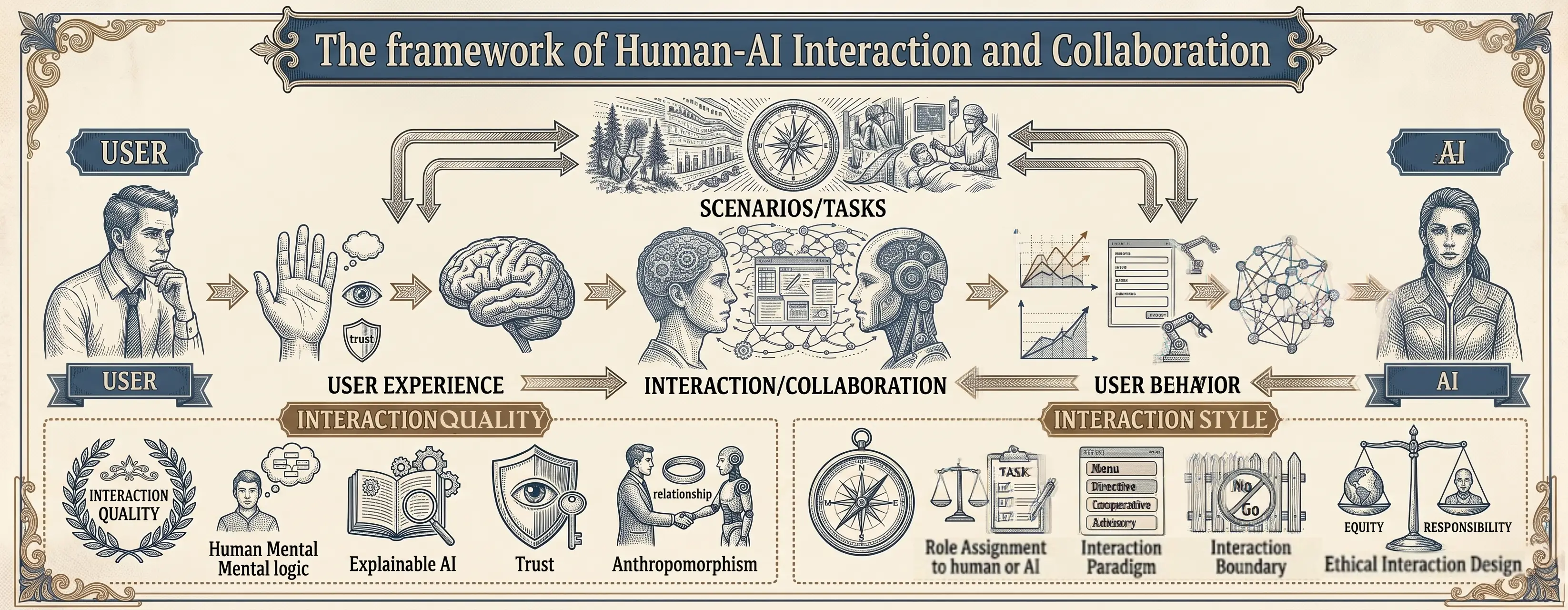
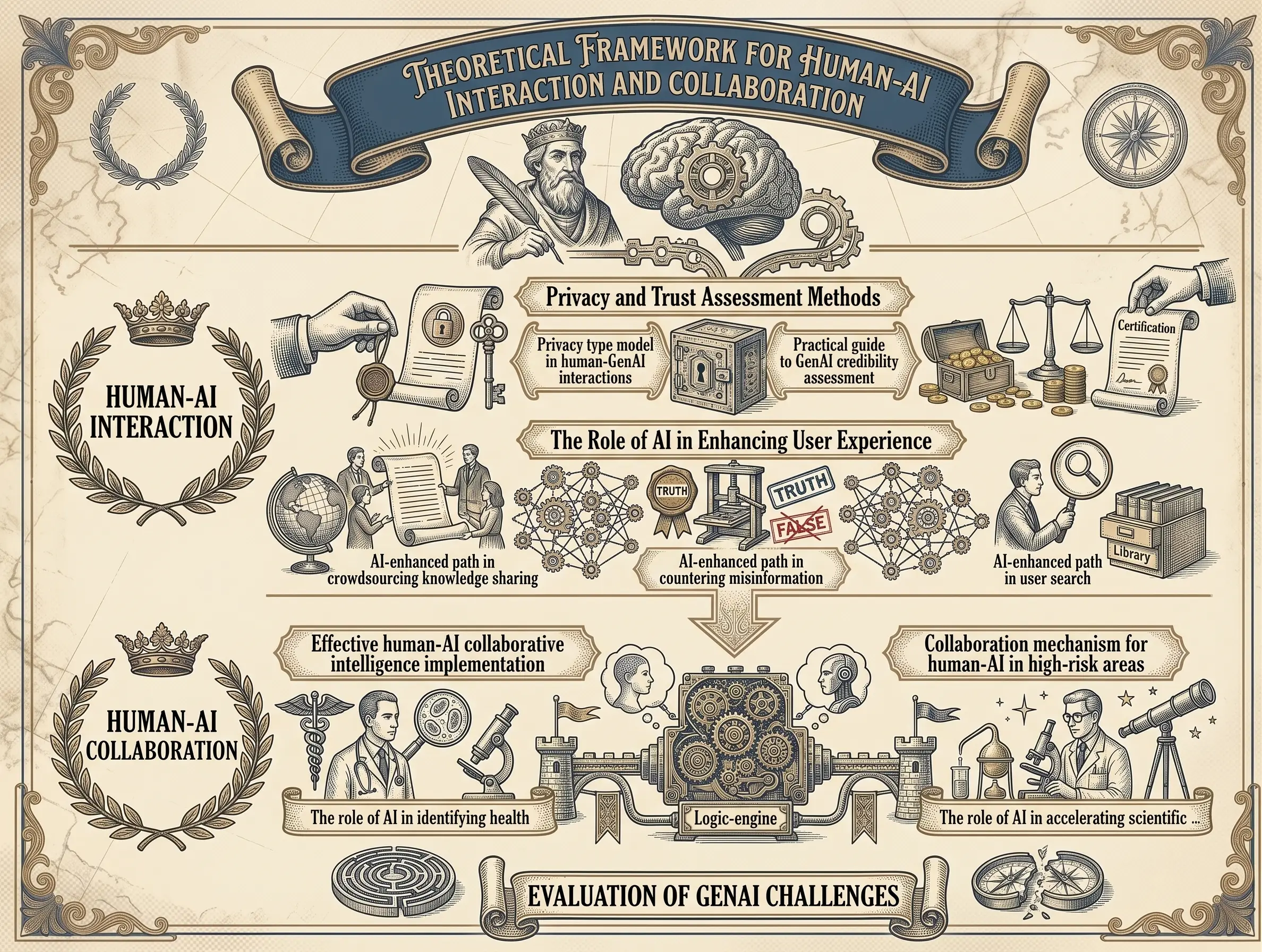
In Human-AI Interaction and Collaboration (Cambridge University Press, 2026), edited by leading information scientists Dan Wu and Shaobo Liang, research across twelve chapters confirms what top operational leaders are discovering the hard way: competitive advantage does not stem from eliminating humans. It comes from mastering the interface where human judgment directs algorithmic power.
Challenge 1: The Trust Calibration Paradox and Cognitive Overload
When executives discover that their teams do not trust automated AI recommendations, their instinctive reaction is to demand complete transparency: "Explain every calculation step the algorithm made."
However, empirical findings in Human-AI Interaction and Collaboration (Chapters 2 and 11) reveal that over-explaining decision mechanisms actively backfires:
When AI systems flood human operators with lengthy decision trees, probability vectors, and technical reasoning, it triggers severe cognitive overload.
Human working memory is strictly bounded. When an overloaded manager is confronted with a dense technical explanation, perceived task complexity spikes, leading to skepticism, fatigue, and a sharp decline in overall trust.
Conversely, when AI outputs appear too polished and conversational, junior staff fall victim to fluency bias, assuming the software is infallible and failing to check critical factual errors.
The Solution: Leaders must implement calibrated trust. Grounded in Ben Shneiderman’s Human-Centered AI (HAI) framework, the interface should present concise, outcome-oriented explanations and intuitive confidence ratings. High-stakes financial and legal workflows must mandate Human-in-the-Loop (HITL) verification checkpoints, while high-frequency, reversible operations run under Human-on-the-Loop (HOTL) supervisory dashboards.
Challenge 2: The Contextual Privacy Trap and "Shadow AI"
When legal and security teams realize that employees are feeding company data into generative AI, their default response is a company-wide ban.
As demonstrated in Chapter 3 by Dan Wu and Guoye Sun, corporate bans never stop AI usage; they merely drive it underground into unmonitored Shadow AI, where employees paste confidential strategy notes into consumer apps on personal devices. Furthermore, static data anonymization (stripping names or phone numbers) fails because modern natural language processing can easily re-identify individuals from surrounding context.
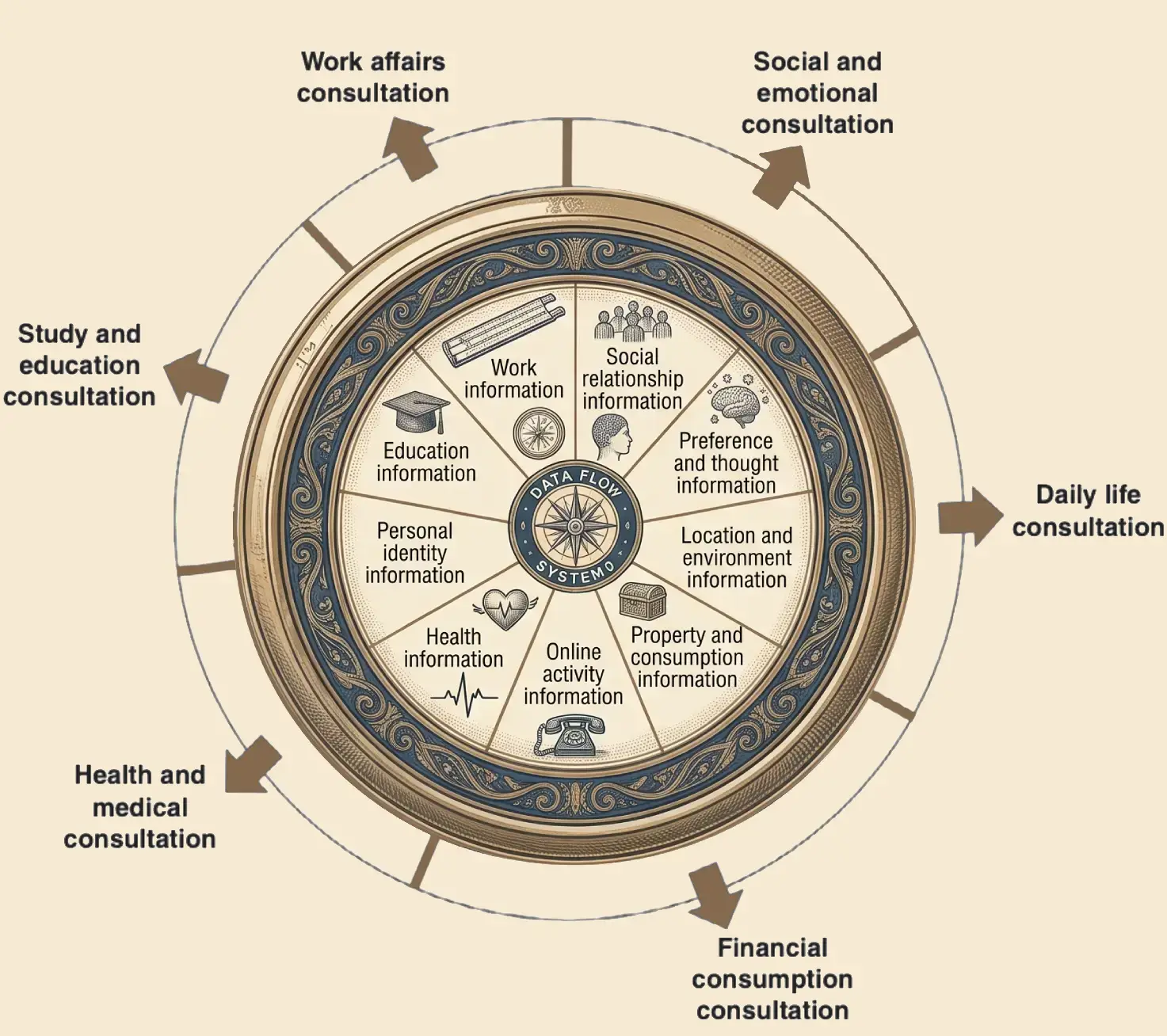
The Solution: Chapter 3 applies Helen Nissenbaum’s Contextual Integrity Theory to establish a 9-Type Privacy Model:
Work information
Social relationship information
Individual preferences and thoughts
Location and environment data
Property and consumption records
Online activity logs
Health data
Personal identity information
Educational background
Instead of blunt, binary IT bans, modern enterprises build contextual routing filters. Non-sensitive public research flows through commercial cloud models, while sensitive internal IP, customer financials, and employee records are automatically routed to private, sovereign Small Language Models (SLMs) running inside the corporate firewall.
Challenge 3: Breaking the Data Bottleneck with Expert-Verified Synthetic Data
A primary reason enterprise AI models underperform is poor training data. Manual data cleaning and annotation is brutally expensive, consuming up to 80% of a data science team’s time and leading to rapid burnout.
In Chapter 9, healthcare researchers Zhuochun Li, Daqing He, and colleagues reveal a major operational breakthrough in dementia caregiver assistance:
Instead of waiting months for clinicians to manually tag thousands of messy social media posts, researchers used GPT-4o to generate synthetic scenarios based on precise clinical definitions.
Human medical experts then reviewed and validated these synthetic drafts.
When fed into the classification engine, expert-verified synthetic data outperformed real-world human data (88% vs. 77% accuracy) because it eliminated irrelevant conversational noise.
By adding a 5-round majority voting process and breaking complex multi-class problems into independent yes/no questions, classification accuracy jumped to 97%.
The Business Takeaway: Do not burn out high-salaried domain experts with manual data entry. Transform your specialists into high-leverage evaluators and verifiers who audit AI-generated drafts.
The Executive Playbook: The Four Operating Directives
To scale collaborative AI systems that your employees will embrace, follow this four-part executive blueprint:
Never Deploy Unmanned Systems in Consequential Workflows: Follow the All-In on AI translator framework by Thomas Davenport and Nitin Mittal. Appoint dedicated "Business Translators" at a strict 1:2 ratio with data scientists to align algorithmic logic with operational reality.
Apply the 10/20/70 Transformation Rule: Allocate 10% of budget to algorithms and 20% to infrastructure. Commit the remaining 70% to workflow redesign, role upskilling, and psychological safety.
Turn Creators into Curators: Redesign software interfaces so AI pre-populates drafts and routine data. Human workers step into the high-value role of editors and decision gatekeepers.
Clarify the Responsibility Gap: Software can calculate probabilities, but it can never take moral or fiduciary responsibility. Establish unambiguous corporate governance policies: the human pilot in the cockpit is always accountable for the final outcome.
Questions & answers
- Why do our knowledge workers resist using AI tools even when the software works accurately?
- Employees resist AI primarily due to unaddressed loss aversion and algorithm aversion. Under Prospect Theory, workers feel the career risk of a single automated error twice as sharply as the benefit of a modest productivity boost. When leadership introduces AI as a cost-cutting replacement rather than an intelligence amplifier, workers experience psychological reactance. When leadership frames AI as an assistant that automates administrative friction while preserving human decision authority, adoption rates increase dramatically.
- How can we prevent our AI models from hallucinating in high-stakes corporate decisions?
- You cannot completely eliminate hallucinations at the foundation model layer, but you can engineer operational guardrails. Implement a dual-tier governance system: pair domain-specific Small Language Models with multi-agent review panels that audit output against factual databases. For consequential decisions, enforce mandatory Human-in-the-Loop verification checkpoints before any action is executed.
- What is the most common mistake leadership teams make when budgeting for enterprise AI?
- The most frequent mistake is budgeting solely for software subscriptions and API token fees while ignoring the human transformation required for adoption. As proven by the BCG Henderson Institute 10/20/70 rule, software and algorithms represent only 10% of the true cost, and technical infrastructure accounts for 20%. The remaining 70% must be invested in business process redesign, workforce upskilling, and establishing dedicated business translator roles.