3 September 2026
Physical AI: Scaling Automation on the Factory Floor
Physical AI succeeds when companies test robotic systems in virtual digital twins before deploying them onto actual factory floors. By decoupling simulation from physical machinery, aligning factory workers with dedicated process translators, and enforcing strict safety interlocks, enterprise leaders automate complex supply chains without risking costly equipment damage or operational downtime.
Physical AI: Scaling Automation on the Factory Floor
When business executives talk about artificial intelligence, the conversation almost always revolves around screens: chatbots that answer customer questions, algorithms that summarize emails, or tools that generate code. But for leaders running manufacturing plants, distribution warehouses, and global supply chains, the real frontier is when AI leaves the screen and enters the physical world.
This is Physical AI: machines, robotic arms, automated forklifts, and sensor networks that interact with the real world.
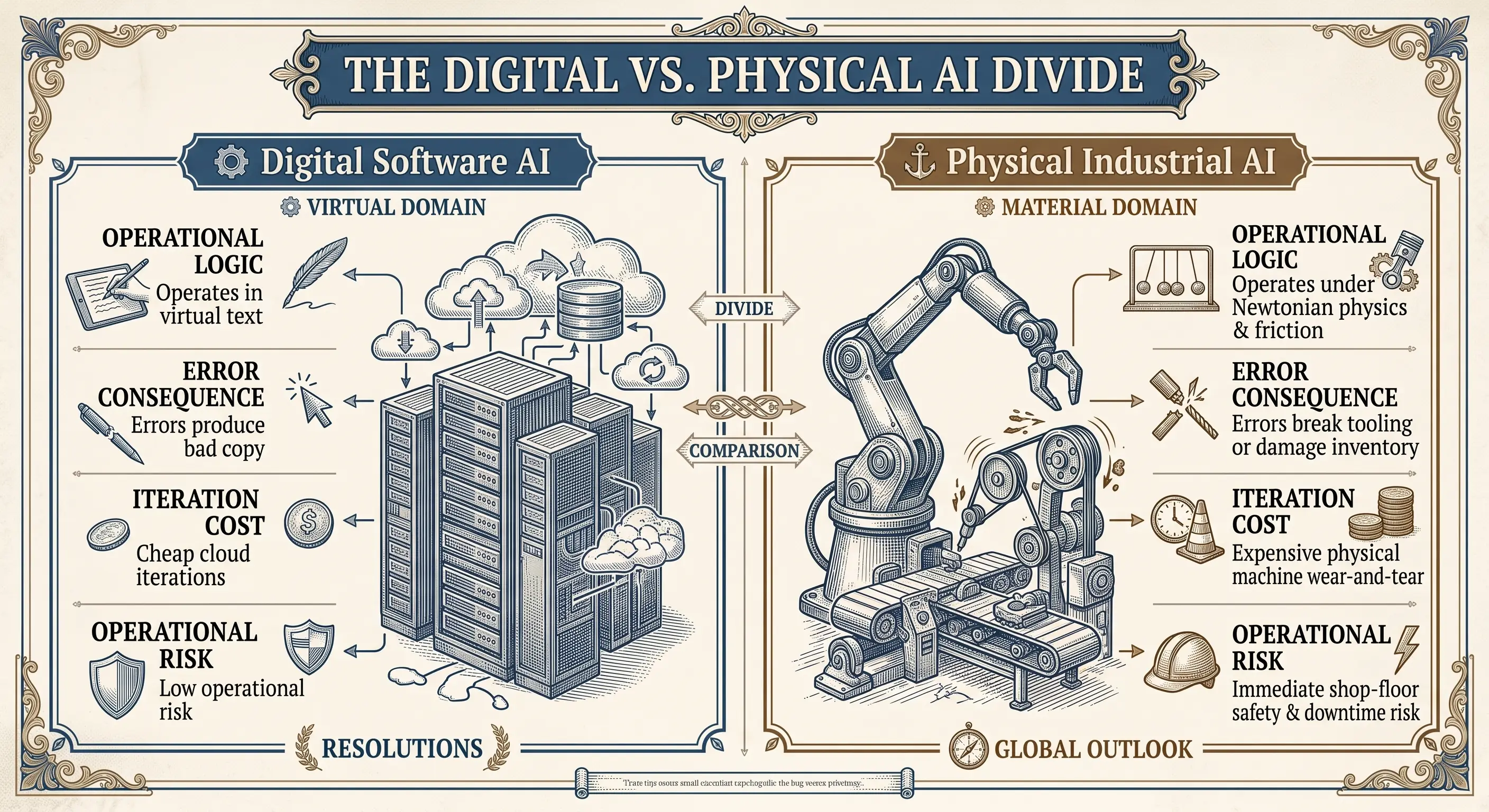
And this is where enterprise stakes rise dramatically. If a marketing chatbot hallucinates, a customer gets an awkward sentence. But if an autonomous robotic arm on an assembly line hallucinates a trajectory, it smashes an expensive fixture, damages finished inventory, or halts an entire factory shift.
Here is why industrial companies struggle to move physical automation past the pilot stage—and how leading brands are solving it.
Challenge 1: You Cannot Afford Trial-and-Error on the Factory Floor
In software development, teams "move fast and break things." In manufacturing and logistics, breaking things costs millions.
As Dr. Yashraj Narang, Head of NVIDIA's Seattle Robotics Lab, explained on The AI Podcast [04:18]:
"Physical AI is fundamentally different from digital AI. A language model predicts words in a sentence where errors produce awkward text. A physical robot interacts with physical contact, mass, friction, and inertia. If a physical model hallucinates a trajectory, an industrial arm breaks a fixture or drops a payload."
A robotic arm cannot drop a thousand heavy auto parts on a live assembly line just to "learn" how to grasp them properly. The motors would burn out and the line would stop.
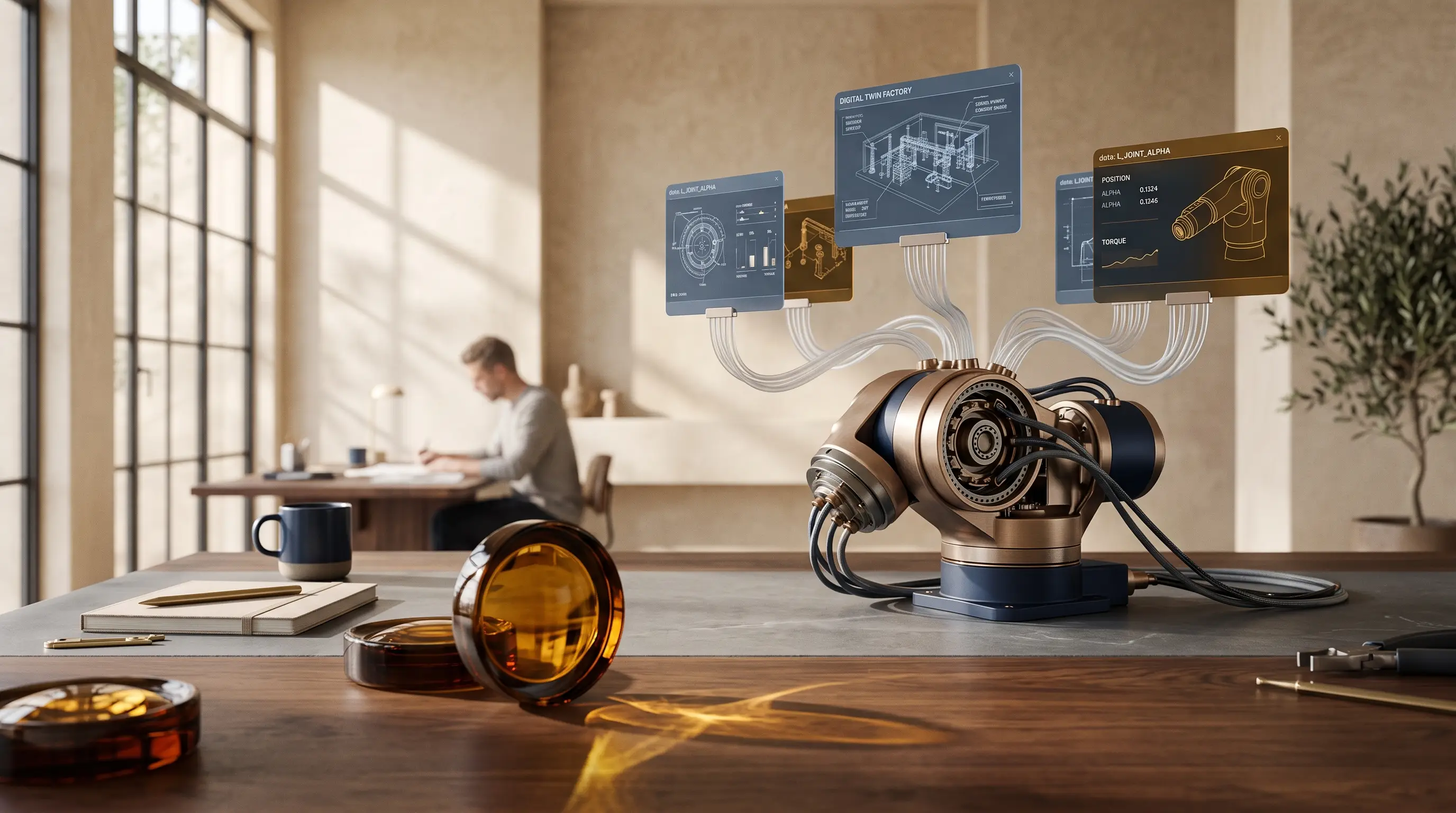
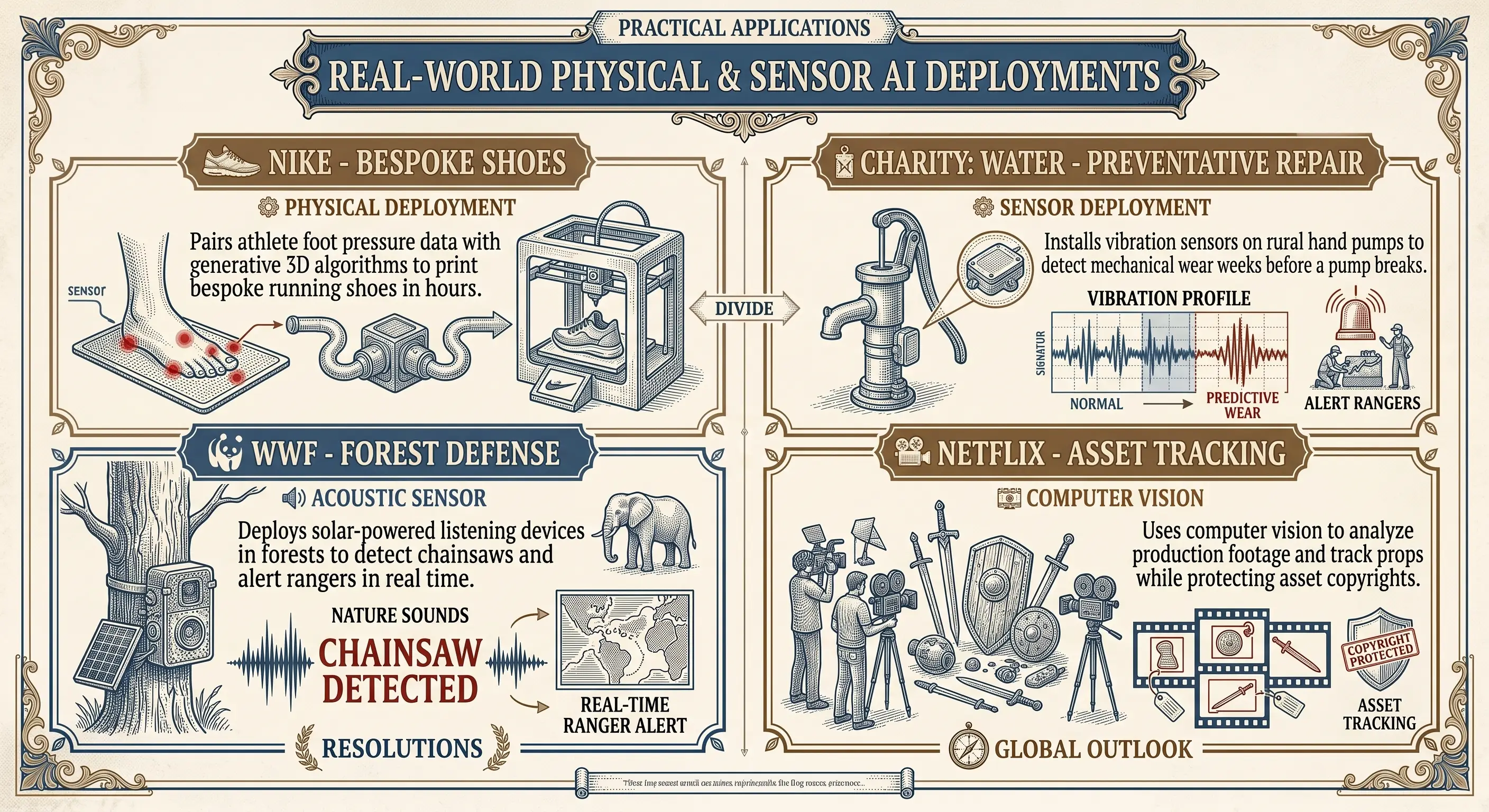
The Solution: Industrial leaders use NVIDIA's Three-Computer Model. Instead of training robots on physical factory floors, they build a complete, physics-accurate Digital Twin in computer simulation. In this virtual factory, autonomous machines experience thousands of shifts in a single afternoon—learning how to handle conveyor vibrations, slippery packaging, and shifting lighting. By the time the software is uploaded to the physical robot on the factory floor, the machine has already mastered the task.
Challenge 2: The Proposal Avalanche and Committee Paralysis
When companies first turn on simulation software, another human problem immediately appears: information overload.
A simulation engine can generate 10,000 viable warehouse layouts or route plans in ten minutes. But when you hand 10,000 options to a corporate review committee, the executives freeze. When humans are flooded with too many options, psychology shows they naturally default to what feels safe—which usually means rejecting the new ideas and sticking to the old process.
Furthermore, as highlighted in AI Explained [13:58], when autonomous AI agents run complex multi-step tasks, they often summarize their own history to save computer memory. During this summarization, crucial safety instructions can accidentally get dropped, leading the agent to make assumptions that do not hold up in the real world.
The Solution: Never ask human managers to review thousands of raw AI simulations. Use automated filtering agents that score options based on clear business criteria (cost, floor space, safety) and present leadership with only the top 3 high-impact proposals.
Challenge 3: The Great Disconnect Between Software Coders and Floor Mechanics
A recurring reason factory automation stalls is cultural: data scientists sitting in headquarters write algorithms that do not account for the messy reality of the plant floor—like grease on a sensor, uneven concrete, or worn conveyor belts.
The Solution: Successful companies like Airbus and Shell apply the Business Translator Model from Thomas Davenport and Nitin Mittal’s All-in on AI. They place dedicated "translators" directly between shop-floor engineers and data science teams (at a strict 1:2 ratio) to ensure mathematical models match physical mechanical tolerances.
The Executive Playbook: How to Scale Physical AI
If your company operates warehouses, assembly lines, or physical delivery networks, follow this three-step blueprint:
Never Test on the Floor First: Mandate that all robotics and automated routing software undergo digital twin simulation before touching live production equipment.
Cut Software Clutter with Unified Control Towers: As technology analyst Matt Wolfe
[14:58]demonstrated, don't buy ten different single-purpose software tools. Use agentic control centers that automatically deduplicate alerts so your operations team isn't drowning in false alarms.Hardwire Physical Safety Interlocks: As outlined in the AI Governance Handbook, never let software algorithms override physical safety boundaries. Enforce immutable hardware-level shutoffs so human operators stay in complete control.
Questions & answers
- Why do our factory automation and robotics projects take so long to deploy?
- Most delays happen because teams try to test robotic software directly on live machinery. Calibrating cameras, lighting, and grip strength on an actual factory floor requires constant shutdowns. By moving testing into a virtual digital twin, companies simulate years of operations in days, downloading pre-tested policies to the floor with minimal downtime.
- How do we prevent automated warehouse robots from colliding with staff or stopping production? A:
- Traditional automated vehicles followed rigid magnetic tape on the floor and stopped dead whenever an obstacle appeared. Modern autonomous mobile robots (AMRs) use on-board spatial sensors and peer-to-peer negotiation to steer smoothly around workers and pallets, governed by immutable hardware-level safety bumpers that halt motion instantly if contact occurs.
- Why does our shop-floor staff push back against automated AI systems?
- Workers resist automation when software teams from headquarters impose systems without understanding the physical realities of the plant floor. Applying the 10/20/70 rule—spending 70% of your transformation budget on worker training, ergonomic redesign, and appointing respected floor mechanics as 'translators'—builds psychological safety and ensures the technology genuinely helps workers do their jobs faster.